Skip to content
Free home delivery from € 30
Order before 11:45 PM, delivered tomorrow
100% No Fish Burp Guarantee
EN

Fish Oil

Fish oil is a rich source of EPA and DHA, the Omega-3 fatty acids that are essential for your health. Oily fish or high-quality fish oil provides these nutrients in the right amounts. DHA and EPA contribute to the normal function of the heart, brain function and the maintenance of normal vision.

  • Save 15% Most chosen
    Omega-3 Gummies

    Omega-3 Gummies

    € 24,50 € 24,50 € 20,83 30 gummies
  • Save 15%
    Fish Oil Capsules

    Fish Oil Capsules

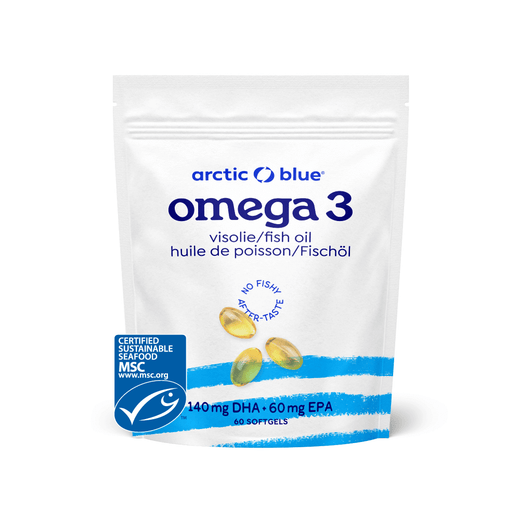
    € 12,90 € 12,90 € 10,97 60 softgels
  • Save 15%
    Fish Oil Capsules (Large)

    Fish Oil Capsules (Large)

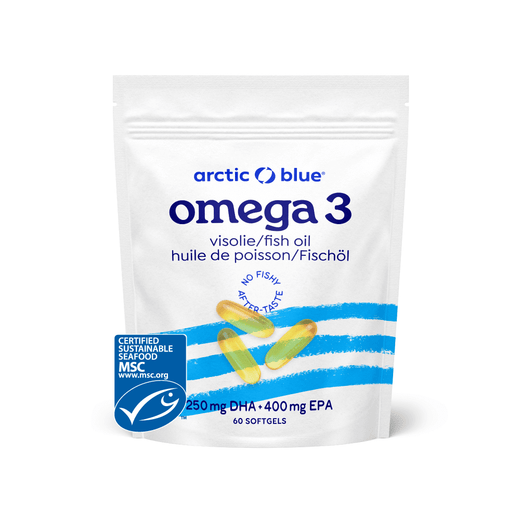
    € 24,90 € 24,90 € 21,17 60 softgels
  • Save 15% Most chosen

    Fish Oil with Vitamin D

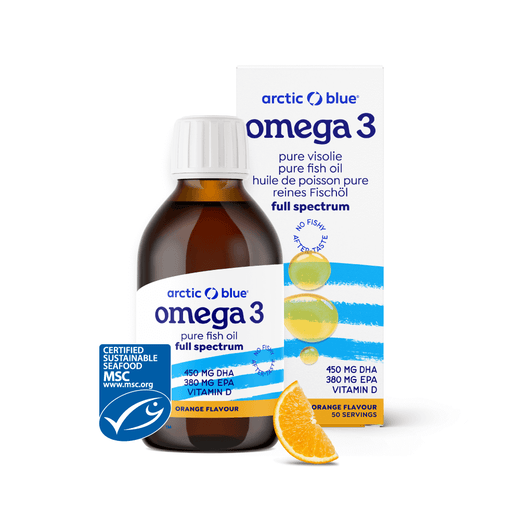
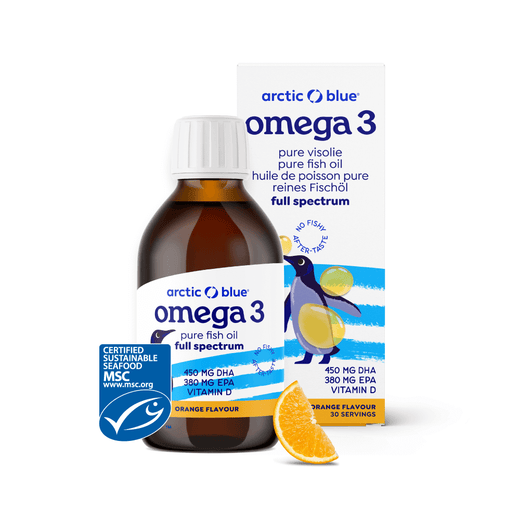
    from € 19,90 € 19,90 € 16,92 30-50 servings
  • Save 15%
    Fish Oil for Kids

    Fish Oil for Kids

    € 19,90 € 19,90 € 16,92 30 doses
  • Save 15% Most chosen
    Fish Oil Capsules with Vitamin D3 (Large)

    Fish Oil Capsules with Vitamin D3 (Large)

    € 17,90 € 17,90 € 15,22 30 softgels
  • Save 15%
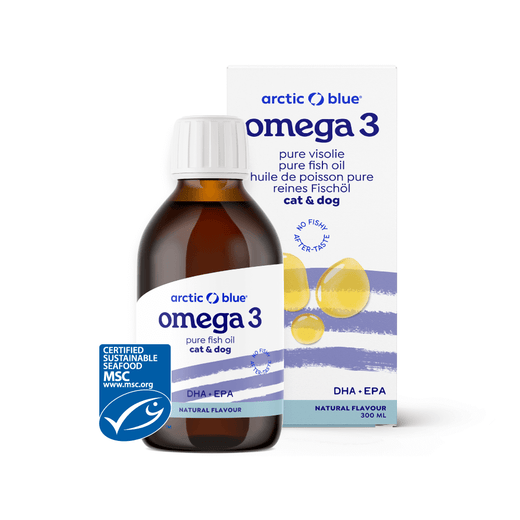
    Fish Oil for Dogs

    Fish Oil for Dogs

    € 29,90 € 29,90 € 25,42
  • Save 15%
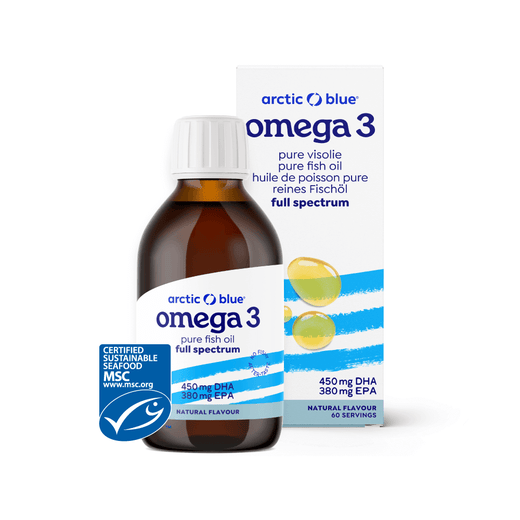
    Pure Fish Oil (Natural Flavour)

    Pure Fish Oil (Natural Flavour)

    € 29,90 € 29,90 € 25,42 60 doses
  • Save 15% New
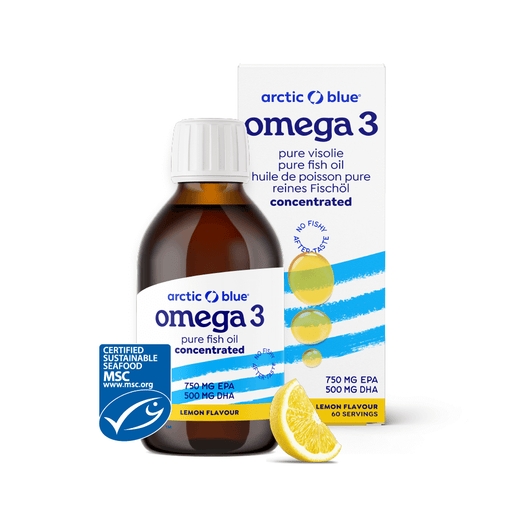
    Fish Oil with High EPA DHA

    Fish Oil with High EPA DHA

    € 39,90 € 39,90 € 33,92 60 doses
  • Save 15%
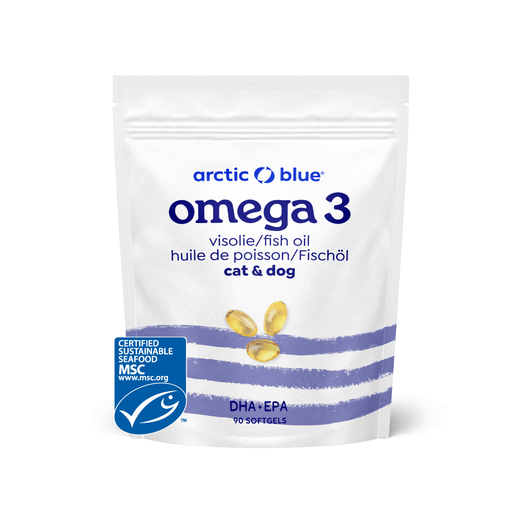
    Fish Oil Capsules for Dogs

    Fish Oil Capsules for Dogs

    € 19,90 € 19,90 € 16,92 90 capsules

All about Fish Oil

Fish oil: capsules & liquid

When Arctic Blue founder Ludo van de Wiel was looking for an omega-3 fish oil with a good taste for his young children, he was not much of a supplement person at all (and still isn't).

Because of the special effects of fish oil, he made an exception for fish oil. When he found the right quality fish oil in Norway, he immediately founded Arctic Blue fish oil; the fish oil supplement specialist with principles.

Arctic Blue now has 8 fish oil products, with or without vitamin D, capsule or liquid.

What is fish oil?

Fish oil is seen by some as a kind of elixir, a magic potion. Not without reason, because of the fish oil composition and fish oil ingredients.

What exactly is fish oil and what does fish oil contain? Fish oil is an important source of Omega-3 fatty acids. These are polyunsaturated fatty acids. The most important are ALA from vegetable oils and nuts, and EPA and DHA from oily fish or algae.

These fatty acids are called essential because our body cannot, or can hardly, produce them itself. We have to get them from our food.

Oily fish or a good fish oil therefore contains enough of these two substances. Omega-3 fish oil is oil pressed from the fatty parts of a fish.

When this is done well, the fish oil taste is perfect and the freshness high. Arctic Blue fish oil with vitamin D stands out here.

Arctic Blue also has fish oil with vitamin D. Both are fats, which makes them ideal to take together.

People with a fish oil deficiency often also have a vitamin D deficiency. The use of fish oil with vitamin D therefore peaks in winter.

Fish oil, why?

Why should I take fish oil?

Fish oil can be necessary for people with certain complaints or when you eat little or no oily fish. Nowadays, with a finger prick test you can measure your Omega-3 level yourself.

It makes clear whether you have eaten enough fish in recent years and how your health is doing.

There can be dozens of reasons why people take fish oil. Literally thousands of studies show that fish oil is healthy.

What does fish oil do?

What fish oil does for you, and exactly how fish oil works, is being researched in various places around the world. It has been scientifically proven that fish oil is good for your heart and for your brain.

But did you know that fish oil pills are also good for your eyes? When people take fish oil, we know that these body parts are nourished.

The Omega-3 fish oil ingredients EPA and DHA can be found in all kinds of places in your body, from your skin to your eyes and from your face to your blood vessels.

The fish oil DHA, for example, is a building block of your brain, nerves and retina, while the fish oil EPA is a building block of hormones.

Healthy fish oil

Fish oil is healthy and many people can benefit from the advantages of fish oil.

The Omega-3 fish oil fatty acids EPA and DHA can contribute to general health. Even at a daily intake of 250 mg of these, Omega-3 fish oil is good for the heart.

Is fish oil also good for your blood pressure? The answer is positive. At a daily 3 grams of these two substances from fish oil, it has been scientifically proven that fish oil helps maintain normal blood pressure.

Both substances (2 grams daily) also contribute to normal fat levels in the blood. Not unimportant when you know that elevated triglyceride levels can be a cause of arteriosclerosis.

It should be said that the upper limit of “too much fish oil” also exists; it lies at 5 grams intake of both substances.

Fish oil is also good for eyesight and brain function at a daily intake of 250 mg fish oil DHA.

Universities are currently researching the many other benefits of Omega-3 fish oil products. Due to European legislation, we are not yet allowed to publish this on a website.

A good fish oil has no disadvantages, only advantages. That is what makes this natural product so special.

Taking fish oil

When you use fish oil, the moment you take it does not matter. This can be in the morning with your breakfast (with the other fats of yoghurt, for example).

You can also take fish oil after dinner. In both cases it mixes well with other fats, so the omega-3 fish oil fatty acids are absorbed well.

Buying fish oil

Which aspects are important when ordering your fish oil? We believe that a good fish oil should never cause burping or an aftertaste. This says something about the quality and freshness of the fish oil.

The best fish oils often also have the best taste. That is why at Arctic Blue we have the so-called 100% no fish burp guarantee. Both for liquid fish oil and fish oil capsules.

Which fish oil you buy can also depend on other things. Arctic Blue is known as a pure fish oil of Arctic origin. It is no coincidence that a fish oil with the MSC label also has high EPA and DHA and extreme freshness.

This is because MSC-certified fish often comes from Norway, and this country perhaps has the best methods for making the freshest and best omega-3 fish oil.

Fish oil side effects

Fortunately, Omega-3 fish oil is not known for side effects. Of course, you can also use too much fish oil (see above). Do not take fish oil on an empty stomach. It is not pleasant and it will not be absorbed well.

How much EPA and DHA does fish oil contain on average per dose?

An average fish oil capsule contains 250 mg DHA+EPA. At Arctic Blue we also have fish oil variants that contain a much higher dose.

How much EPA and DHA do you need daily?

This can vary greatly from person to person and depends on various factors such as your diet, your health and your body weight. A minimum dose is 200 mg, and for specific health goals this can rise to as much as 3000 mg. People who want to know exactly first take an Omega-3 index test. We explain it further here.

How much fish oil should you take for specific health goals?

For specific health goals such as heart or brain, the dosage advice is between 500-1000 mg DHA+EPA. For blood triglycerides and blood pressure this is higher, at 2000 and 3000 mg DHA+EPA respectively. On the other hand, this is also determined by your current Omega-3 status (your Omega-3 index). You can measure it with an Omega-3 index test. We explain it further here.

How quickly do you notice the effect of fish oil?

Depending on the intended effect, this is between 4 and 12 weeks. However, this also depends on your daily intake and your current Omega-3 status (your Omega-3 index). You can measure it with an Omega-3 index test. We explain it further here.

Should you take fish oil with food for better absorption?

Yes. That food must contain fat, though. The best absorption takes place after the largest meal.

Can you combine fish oil with other supplements, such as vitamin D?

Vitamin D, like omega-3, is fat-soluble and is absorbed better when you take it with fat. If you take it together with fish oil, you improve the absorption of vitamin D. That is why omega-3 and vitamin D are often combined in one product.

How do you know if you need fish oil (omega-3 deficiency)?

You usually do not notice an omega-3 deficiency directly, but there are clear signals, and also ways to measure it objectively. Due to Dutch legislation, the signals may not be mentioned. With the Omega-3 Index test, a blood test you can do yourself, you measure the percentage of EPA and DHA. This is a measure of the % Omega-3 in your entire body. A healthy value is between 8% and 12% of the total fatty acids. If you eat little or no oily fish, there is a good chance that your Omega-3 status is off.

What are possible side effects of fish oil?

In general, fish oil is safe with normal use, but some people may experience mild side effects. Taking it on an empty stomach can cause stomach complaints or loose stools. Take the oil after the main meal. Stomach complaints can also be the result of a rancid (poor quality / oxidised) oil. Very high doses (> 3000 mg EPA+DHA per day) have a mild blood-thinning effect. This is not a problem. However, if you take blood thinners, you will need to discuss your Omega-3 use with your doctor. Very high doses (> 3000 mg EPA+DHA per day) are also good for blood pressure. Positive with high blood pressure, but in combination with blood pressure medication, monitor your blood pressure.

What is the legal safe upper limit for fish oil use?

The safe upper limit for fish oil depends on the amount of EPA and DHA (the active omega-3 fatty acids). It does not depend on the total amount of oil. The official guideline in Europe is that up to 5,000 mg (5 g) EPA + DHA per day from supplements is safe for adults.

Is fish oil safe during pregnancy?

Yes, Arctic Blue fish oil is safe during pregnancy, and can even have important benefits for the development of the baby. Arctic Blue products never contain vitamin A (which can be harmful in higher doses). The EFSA (European food authority) advises 250 – 450 mg DHA + EPA per day during pregnancy and breastfeeding. In an ideal world, a woman has an optimal Omega-3 index (status) before becoming pregnant. More information in this blog.

Is fish oil suitable for children?

Yes, fish oil is suitable for children, provided the dosage is adjusted to their age and weight. It can even offer important benefits for the brain, heart and eyes. Arctic Blue has special products for (small) children, such as liquid oil and gummies.

Are there interactions between fish oil and medicines (e.g. blood thinners)?

Yes, fish oil (omega-3 fatty acids) can interact with certain medicines, especially at high doses. In general it is safe, but it is good to know about these possible interactions. Very high doses (> 3000 mg EPA+DHA per day) have a mild blood-thinning effect. At normal doses (up to 3 g EPA + DHA/day) this is usually not clinically relevant, but at higher doses the bleeding tendency can increase. If you take blood thinners (acenocoumarol, phenprocoumon, warfarin, apixaban, dabigatran, rivaroxaban, aspirin), you will need to discuss your Omega-3 use with your doctor or pharmacist. Very high doses (> 3000 mg EPA+DHA per day) are also good for blood pressure. Positive with high blood pressure, but in combination with blood pressure medication (ACE inhibitors, beta blockers, diuretics), monitor your blood pressure.

Can fish oil cause stomach complaints?

Taking fish oil on an empty stomach can cause stomach complaints. Take the oil after the main meal. Stomach complaints can also be the result of a rancid (poor quality / oxidised) oil. Arctic Blue oil is not oxidised and will never cause burping. We therefore offer a 100% no fish burp guarantee.

How do you recognise a good quality fish oil?

You can recognise the good quality of a fish oil by a number of important characteristics. The most important is origin/purity; where does the fish come from? Arctic Blue fish oil is guaranteed to come from Arctic seas. Freshness/oxidation is also important. A fish oil should never cause burping; this is a sign of oxidation or even rancidity. Arctic Blue therefore offers a 100% no fish burp guarantee thanks to our low Totox value. Third, Arctic Blue has MSC certification with the blue label. Proof that the oil is made from wild fish from sustainable fisheries. Fourth, all Arctic Blue Omega-3 products are in the natural triglyceride form for optimal absorption.

Can fish oil turn rancid or oxidise?

Yes, fish oil can turn rancid (oxidise). That is an important quality point to watch out for. Omega-3 fatty acids (EPA and DHA) are very sensitive to oxygen, light and heat. Through oxidation, the oil loses its effect and can even cause stomach complaints or burping. At Arctic Blue we measure the peroxide value and anisidine values, which together are a measure of the Totox value (Totox). Arctic Blue oil is not oxidised and will never cause burping. We therefore offer a 100% no fish burp guarantee. Arctic Blue oil has good freshness, which is maintained by natural vitamin E and C-containing antioxidants and rosemary extracts that are added to the oil during production.

What is the best way to store fish oil?

It is important that liquid oil is stored in the refrigerator after opening. A bottle must be made of dark glass for optimal protection of the omega-3 fatty acids, which are sensitive to light, oxygen and heat. Capsules should be stored dry and out of direct sunlight. In summer they can also be kept in the refrigerator. Arctic Blue also has special storage jars for capsules.

Free personal advice

Response within ± 2 hours

Our product experts are happy to help you with personal advice.

Your cart
Your cart is empty
Not sure where to start? Try these collections:
Continue shopping Continue shopping
Cart total € 0,00 EUR
Product image Product information Quantity Product total